
Why play-based learning works in the early years
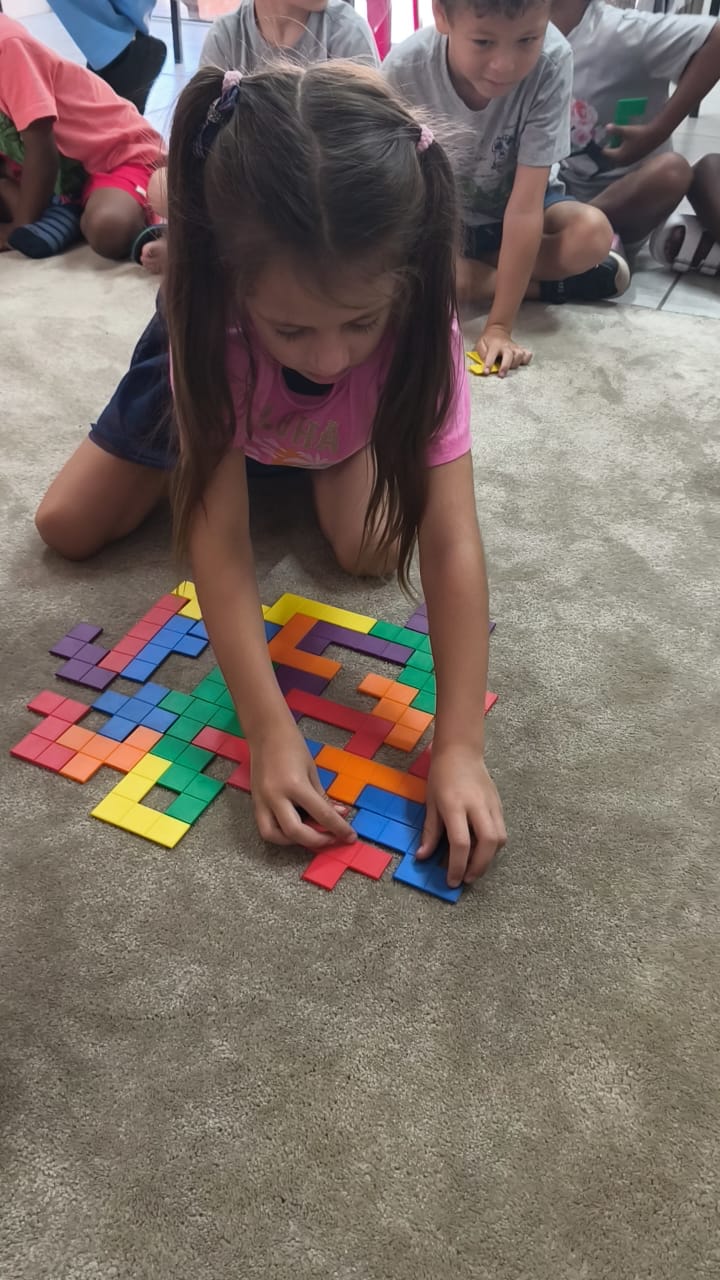
Walk into a Luluki classroom on a Tuesday morning and you'll see toddlers sorting wooden blocks by colour, three-year-olds pouring water between cups in a sensory tray, and a small group of pre-schoolers building an elaborate "shop" out of cushions. To an outsider it can look like organised chaos. To us, it's a curriculum.
Play-based learning isn't a soft alternative to "real" teaching, it is the most effective way young children learn. Here's why, and how we put it into practice every day.
What play-based learning actually means
Play-based learning is a structured approach where teachers design environments, materials, and prompts that guide children to discover concepts through hands-on play. It is not a free-for-all. Every "toy" on a Luluki shelf has been chosen for the developmental skill it builds, fine motor strength, early numeracy, language, problem-solving, social negotiation.
The teacher's role is to observe, scaffold, and gently extend: ask the right question at the right moment, offer the next puzzle when the current one is mastered, model the words a child needs to ask a friend for a turn.
The science: why young brains learn through play
Children under six are in the most rapid period of brain development they will ever experience. Synapses, the connections between brain cells, form at a rate of more than a million per second in the first few years of life. Those connections are built through experience.
Play provides the kind of experience young brains are wired for:
- It's repeated. A child fills and empties the same bucket twenty times. That repetition is what consolidates a neural pathway.
- It's emotionally engaged. When a child is genuinely interested, the brain releases dopamine, which strengthens learning.
- It's social. Negotiating turns, reading another child's face, working out who is "the doctor", these are the building blocks of social cognition.
- It's physical. Crossing the midline, balancing, gripping a small object, fine and gross motor work underpins later skills like writing.
"My daughter has blossomed since being in Luluki. The teachers are caring and compassionate, and the school goes above and beyond in everything they do." — George Smith, Luluki parent
What it looks like at Luluki
Our curriculum is CAPS-aligned and informed by neuroscience, but in practice it lives in small, deliberate moments through the day:
Morning: structured exploration
Children rotate between learning stations, a literacy corner with phonics-based activities, a maths table with manipulatives, a sensory tray, an art station. Teachers set the activities to match the developmental stage of the group, then step back and watch.
Mid-morning: outdoor play
Time outside isn't a break from learning, it's some of the most important learning of the day. Climbing the jungle gym builds vestibular processing. Pouring sand teaches volume. A game of "shop" under the trees develops language, negotiation, and early maths all at once.
Afternoon: focused small groups
After rest time, teachers work with small groups on phonics, early numeracy, and creative projects, while other children continue at chosen play stations.
What parents can do at home
The best play-based learning at home is also the simplest. You don't need expensive toys or a Pinterest-perfect playroom.
- Narrate. "You're pouring the water carefully. Now it's full. Now it's empty." You're building vocabulary in real time.
- Open-ended materials win. Blocks, cardboard boxes, scarves, water, sand, these can become a hundred different things. Single-purpose toys can only become one.
- Resist rushing the answer. When your child is struggling with a puzzle, wait. The struggle is where the learning happens.
- Get outside, every day. Even fifteen minutes in the garden offers more developmental work than an hour of screens.
The bottom line
A child building with blocks is doing developmental work that a worksheet simply cannot match. They are sequencing, problem-solving, balancing, persisting through frustration, communicating with peers, and, quietly, laying down the neural foundations for everything that comes next, from reading to maths to friendship.
That's what we mean when we say play is the curriculum. And it's why, when you visit Luluki, you'll see children who look like they're "just playing", and teachers who know exactly what they're learning.
Want to see it in action? Book a tour and we'll show you a typical morning at Luluki.